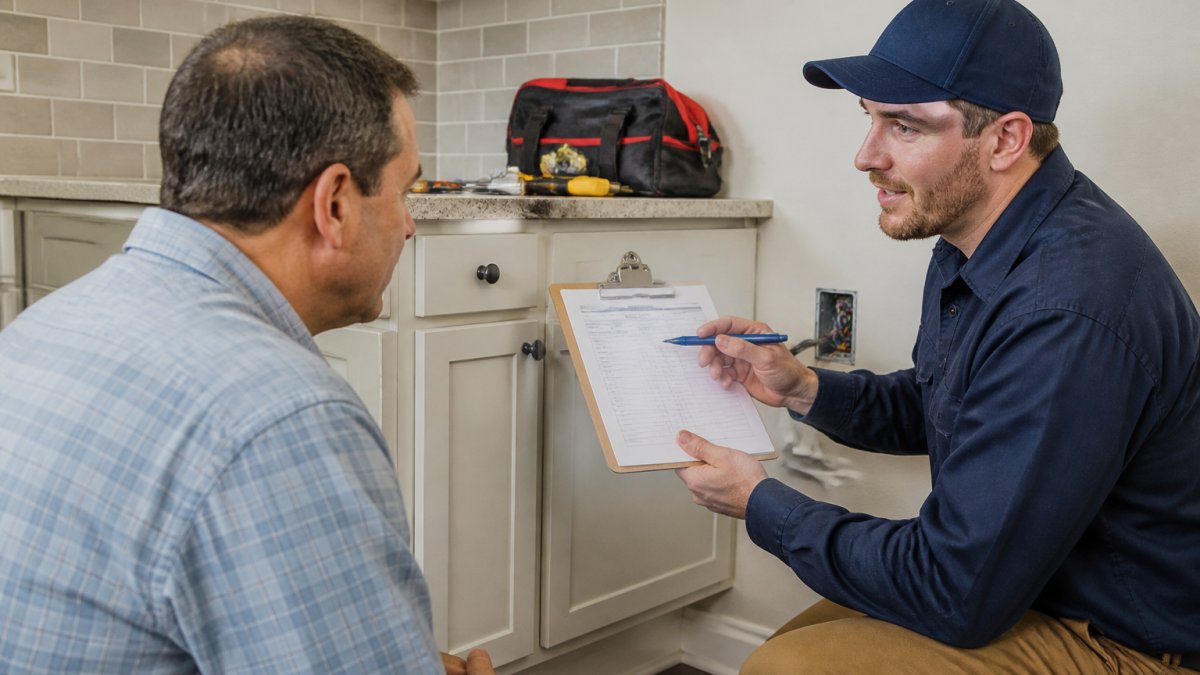
 ultimate-guide
Electrical Repair Pricing Models Explained
Table of Contents
- Why Electrical Repair Pricing Varies So Much
- Flat Rate vs. Hourly Electrical Pricing
- What Is an Electrical Service Call Fee?
- Factors Affecting Residential Electrical Repair Costs
- How to Get an Accurate Electrical Repair Quote
- Warranty and Guarantee Impact on Long-Term Value
- Frequently Asked Questions
Last Updated: September 28, 2026
Why Electrical Repair Pricing Varies So Much
The quote you receive for an electrical repair depends on far more than labor time. The cost structure, flat-rate or hourly, changes everything about what you'll pay. Understanding electrical repair pricing models and how electricians structure their business model explains why two quotes for the same job can differ dramatically.
Electrical repair pricing models determine whether your bill is transparent and predictable or full of surprises. Some contractors charge hourly; others quote a flat rate upfront. Each approach has trade-offs, and understanding them helps you make an informed decision.
Flat Rate vs. Hourly Electrical Pricing
The choice between flat-rate and hourly pricing fundamentally changes how you pay for electrical repairs. These two models represent opposite philosophies: one prioritizes certainty, the other emphasizes flexibility.
Flat-Rate Pricing: What You See Is What You Pay
Flat-rate pricing locks in a fixed price before work begins, protecting you from surprise bills and giving contractors incentive to work efficiently.
Flat-rate pricing works well for common repairs with predictable scope, replacing an outlet, installing a light fixture, upgrading a circuit breaker, because electricians can estimate labor accurately and material costs are known.
If the electrician finishes faster than expected, you don't pay extra. If complications arise, the contractor absorbs the cost, incentivizing thorough upfront troubleshooting rather than mid-project discoveries. This builds trust.
Pros of flat-rate pricing:
- Total cost is known before work begins
- No hourly meter running in your head
- Contractor motivation to work efficiently
- Easier to budget and compare quotes
Cons of flat-rate pricing:
- May not suit unusual or complex projects
- Contractor estimates conservatively to protect margin
- Less flexibility if scope changes mid-job
Hourly Labor Rates: Time-and-Materials Approach
Hourly pricing charges for every minute spent plus materials. This model works when scope is unclear or the repair is unusual, so you pay for what's actually needed.
Hourly rates include labor burden, overhead, licensing, insurance, and tools, making the effective rate higher than wages alone. Rates vary by experience level and local market conditions.
Time-and-materials pricing makes sense for diagnostic work and troubleshooting where scope is unclear until investigation.
Pros of hourly pricing:
- Fair for unpredictable or complex jobs
- You only pay for actual work performed
- Works well for troubleshooting and diagnostics
- Flexible if scope changes
Cons of hourly pricing:
- Total cost is unknown until the job ends
- Incentivizes slower work (though ethical contractors don't do this)
- Harder to compare quotes from different electricians
- Budget uncertainty
| Pricing Model | Best For | Cost Predictability | Contractor Incentive |
|---|---|---|---|
| Flat-Rate | Common repairs, known scope | Certain upfront | Efficiency |
| Hourly | Complex diagnostics, unclear scope | Unknown until complete | Thorough work |
What Is an Electrical Service Call Fee?
A service call fee (also called a diagnostic or trip charge) covers the electrician's time to evaluate the problem and provide a quote.
Factors Affecting Residential Electrical Repair Costs
Several factors affect electrical repair costs independent of pricing model. Understanding these variables helps you anticipate costs and compare quotes across regions.
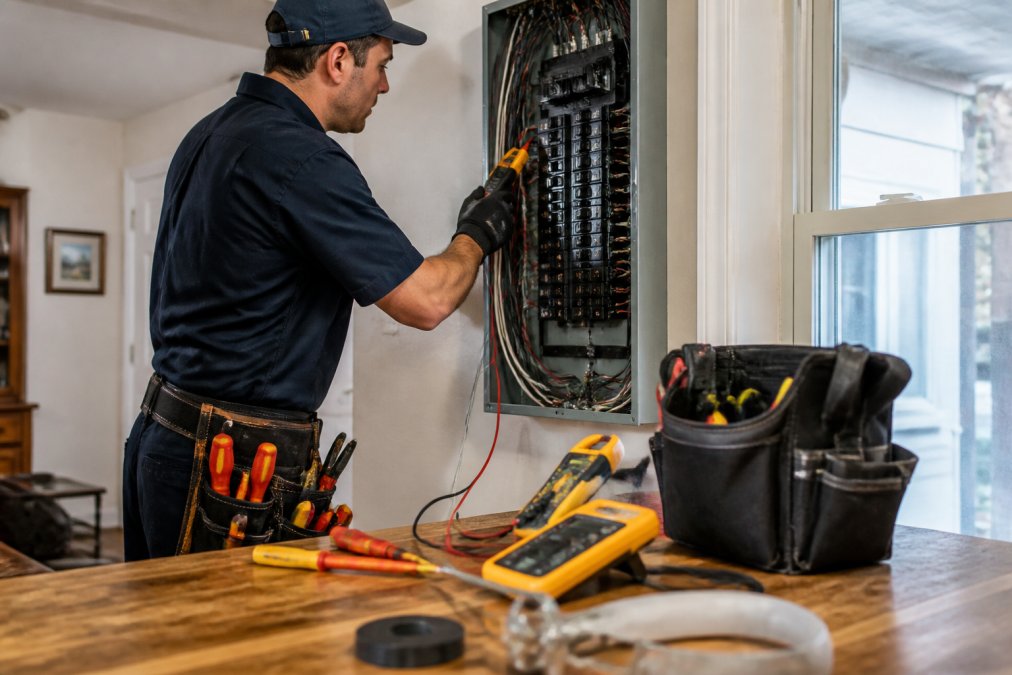
Project Complexity and Scope
Simple repairs like outlet replacement cost less than complex work like rewiring circuits or upgrading panels. Scope, what actually needs to be done, is the primary cost driver. A straightforward outlet replacement takes 30 minutes; troubleshooting and rewiring a faulty circuit takes several hours.
Licensed Electrician Experience Level
Master electricians command higher rates than journeymen due to deeper troubleshooting skills and faster diagnostics. For straightforward repairs, a journeyman delivers the same result at lower cost. For complex diagnostics, the master's expertise justifies the premium. Experienced electricians are more reliable, finish on time, identify problems upfront, and provide warranty coverage.
Material Costs and Electrical Code Compliance
Materials, wire, breakers, outlets, conduit, add to total cost. A circuit breaker costs $50-150; panel upgrades cost significantly more. Electrical code compliance is non-negotiable. All work must meet the National Electrical Code (NEC). Compliant work costs more but prevents fire risk and liability.
Emergency vs. Standard Service Calls
Standard business-hours calls cost less than emergency calls. Emergency surcharges can be 50% or more. Some contractors offer flexible scheduling without premiums; others charge flat emergency fees. Know your contractor's policy before deciding whether to wait until morning.
Regional Cost Variance and Local Market Adjustment
Geography significantly affects costs. A service call costing $150 in a rural area might cost $250 in a major metro. A panel upgrade costing $3,000 in one state might cost $4,500 in another due to stricter code or higher prevailing wages.
How to Get an Accurate Electrical Repair Quote
Getting multiple quotes is standard practice. Comparing them fairly requires understanding what each includes and verifying the contractor is qualified and licensed.
Requesting Detailed Quotes
Describe the problem in detail. Instead of "my outlet doesn't work," say "the kitchen outlet by the sink stopped working; the one next to it works fine." Ask each contractor their pricing model, service call fee, and whether it applies to repair costs. Get quotes in writing with labor and materials breakdown. Request a timeline and ask about warranty coverage (typically 1 year on labor for standard repairs).
Contractor Vetting Checklist: Verify License, Insurance, and Legitimacy
Before hiring, verify credentials. Unlicensed electricians quote lower prices but expose you to safety risks, code violations, and liability. Use this checklist:
1. Verify State Electrical License
- Ask for the license number and verify it on your state's licensing board website.
- Confirm the license is active (not expired or suspended).
- Check the license type: Master or Journeyman are appropriate for independent work; Apprentice requires supervision.
- Confirm the license holder's name matches the contractor you're hiring.
2. Confirm Current Insurance Coverage
- Ask for a Certificate of Insurance showing General Liability and Workers' Compensation.
- Verify it's current and lists the contractor's company name.
- General Liability should be at least $300,000 per occurrence; $1 million is better.
- Call the insurance company to confirm coverage is active.
3. Check for Complaints and Disciplinary History
- Search your state's licensing board for complaints or disciplinary actions.
- Check the Better Business Bureau (BBB) for complaints and resolution history.
- Search Google and Yelp for reviews. One negative review is normal; multiple complaints about billing, incomplete work, or code violations are red flags.
4. Verify Business Registration and Tax ID
- Ask for their business license or registration number and verify it with your state or local office.
- A legitimate contractor has a registered business and tax ID (EIN). Cash-only payment with no receipt is a major red flag.
5. Confirm Bonding (If Required by Your State)
- Check your state's requirements. If bonding is required, ask for proof of a current bond.
- If they don't have one and your state requires it, do not hire them.
6. Ask About Continuing Education and Code Knowledge
- Ask how many continuing education hours they complete annually.
- Ask whether they're familiar with the current National Electrical Code (NEC) and your local amendments.
Red Flags: When to Walk Away
- No license or refuses to provide it. Disqualifying.
- No insurance or expired insurance. You're liable if someone is injured.
- Pressure to pay cash with no receipt. Legitimate contractors provide invoices.
- Unwilling to provide references. Confident contractors will.
- Quote 30-40% cheaper than others. Ask why; it may indicate corner-cutting or code violations.
- No written quote or refuses to itemize labor and materials. You need clarity on costs.
- Vague about warranty or refuses to offer one. Confident contractors guarantee their work.
Why Vetting Matters: The True Cost of Unlicensed Work
Hiring an unlicensed electrician to save $200 on a repair can cost you thousands later. Unlicensed work often violates electrical code, creating fire hazards, shock risks, and insurance claim denials. If an electrical fire starts in your home and the work was done by an unlicensed contractor, your homeowner's insurance may refuse to pay for damages. You could also face liability if someone is injured due to faulty electrical work.
Warranty and Guarantee Impact on Long-Term Value
The warranty a contractor offers affects the true cost of the repair over time. A repair with a 1-year labor warranty costs less in risk than one with no warranty. If something fails within the warranty period, the contractor fixes it at no charge, you're protected.
Frequently Asked Questions
What is the difference between flat-rate and hourly electrical pricing?
Flat-rate pricing gives you one fixed cost for the entire job, regardless of how long it takes. Hourly pricing charges you for labor time plus materials. Flat-rate works best when the scope is clear and predictable; hourly is common for diagnostic work or when the repair scope is uncertain. Flat-rate provides budget certainty upfront, while hourly can cost less if the job finishes faster than expected.
Why do electricians charge a service call fee?
A service call fee covers the electrician's time to visit your home, diagnose the problem, and provide an estimate. This fee reflects overhead costs like vehicle maintenance, insurance, and labor for the initial assessment. Many electricians apply this fee toward your final bill if you hire them for the repair. Understanding this upfront helps you budget for electrical service and explains why you're charged even before work begins.
What factors affect the cost of residential electrical repair?
Project complexity, the electrician's experience level, material costs, permit requirements, and whether the work is emergency or standard all influence pricing. Older homes with outdated wiring or code compliance issues typically cost more. Licensed electricians with master certifications charge more than apprentices, but offer greater expertise. Material markup and electrical inspection fees also add to the total. Getting multiple quotes helps you understand what drives costs for your specific repair.
How can I avoid hidden electrician fees?
Ask for a detailed written estimate that breaks down labor, materials, permits, and any service call fees. Clarify whether the quote includes electrical inspection costs or permit fees. Confirm the pricing model upfront: flat-rate or hourly. Ask what happens if the electrician discovers additional issues during the work. Reputable contractors provide transparent quotes and explain any changes before proceeding, protecting you from surprise charges.