 ultimate-guide
Industrial Electrical Safety Compliance in Florida: A Guide
Table of Contents
- Understanding Industrial Electrical Safety Compliance
- National Electrical Code and OSHA Standards for Industrial Facilities
- Building an Industrial Electrical Safety Program
- Industrial Electrical Inspection Checklist and Testing Requirements
- Electrical Lockout Tagout Procedures for Safe Maintenance
- Obtaining Industrial Electrical Permits and Authority Review
- Incident Response and Corrective Action for Electrical Failures
- Frequently Asked Questions
Last Updated: October 17, 2026
Understanding Industrial Electrical Safety Compliance
Industrial electrical safety compliance in Florida requires a comprehensive approach to protecting workers and infrastructure from electrical hazards.
Arc flash incidents, electrical shock, and electrocution can occur when equipment is improperly maintained, workers lack training, or safety protocols aren't enforced.
Industrial electrical safety compliance in Florida involves multiple connected layers: understanding applicable codes, building a safety program, conducting regular inspections, training employees, and responding appropriately when incidents occur.
National Electrical Code and OSHA Standards for Industrial Facilities
The National Electrical Code (NEC) and OSHA electrical safety standards form the regulatory backbone for industrial electrical work in the United States.
The NEC, published by the National Fire Protection Association (NFPA), sets minimum requirements for safe electrical installation and maintenance and is updated every three years.
The key distinction: the NEC focuses on installation and design, while OSHA and NFPA 70E focus on how workers interact with electrical systems safely.
Building an Industrial Electrical Safety Program
A strong industrial electrical safety program ties together inspection, maintenance, training, and incident response.
A qualified person, as defined by OSHA and NFPA standards, is trained to recognize electrical hazards and take corrective action.
Maintain records of inspections, maintenance, training, incident investigations, and corrective actions.
Risk assessment is another core component: evaluate your distribution system, identify hazards, and determine required PPE and work procedures.
Industrial Electrical Inspection Checklist and Testing Requirements
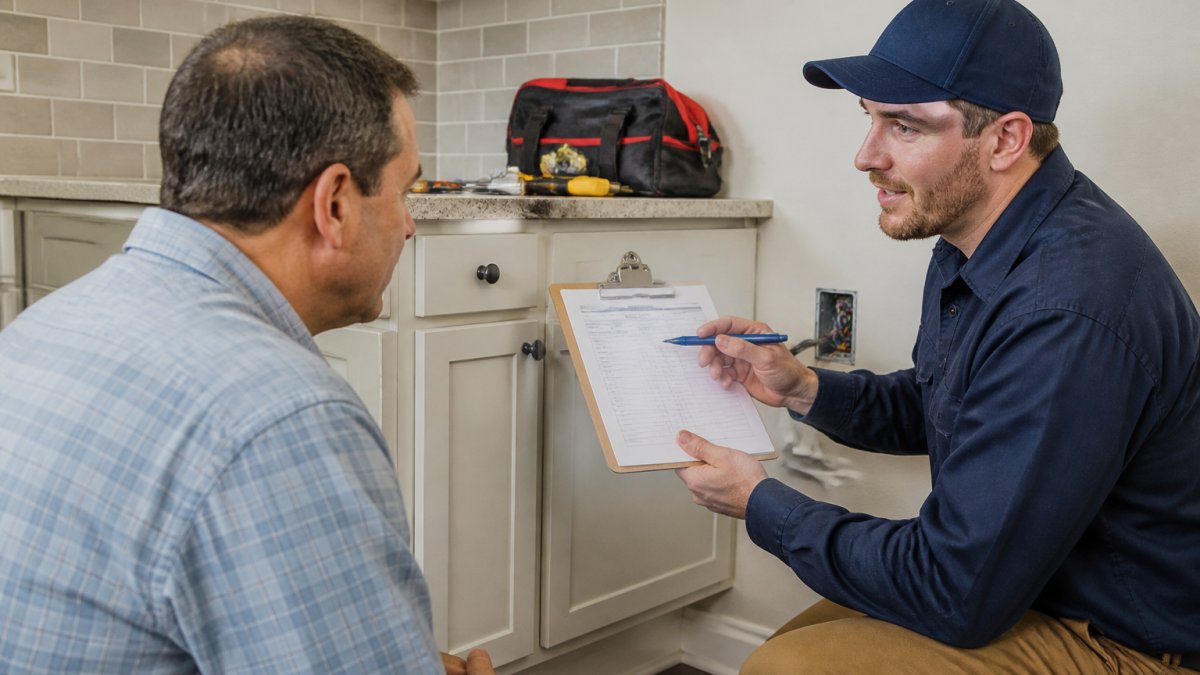
Regular inspections catch problems before they become incidents or citations, but a checklist without intervals, test methods, and records is not auditable. The framework below gives facility managers a defensible schedule.
Inspection and testing intervals
Intervals below reflect common industry practice and manufacturer recommendations; confirm against the equipment listing, the adopted NEC edition, and any insurer requirements, which can be stricter.
| Activity | Typical interval | Records to retain |
|---|---|---|
| Visual inspection of panels, disconnects, and enclosures | Monthly to quarterly | Dated checklist with inspector initials |
| Infrared thermographic scan of distribution equipment under load | Annually | Thermal images with baseline and exception report |
| Torque verification of terminations on critical gear | At installation and after any rework | Torque log with tool calibration record |
| Insulation resistance testing of motors and feeders | Annually or on condition | Test values compared to prior readings |
| Grounding and bonding continuity verification | Annually | Resistance readings and electrode inspection notes |
| GFCI and arc-fault device testing | Monthly for personnel protection devices | Pass/fail log per device |
| Protective device coordination and arc-flash study update | Every five years or after a significant system change | Stamped study and updated labels |
| Lockout/tagout procedure audit | Annually | Audit findings and corrective actions |
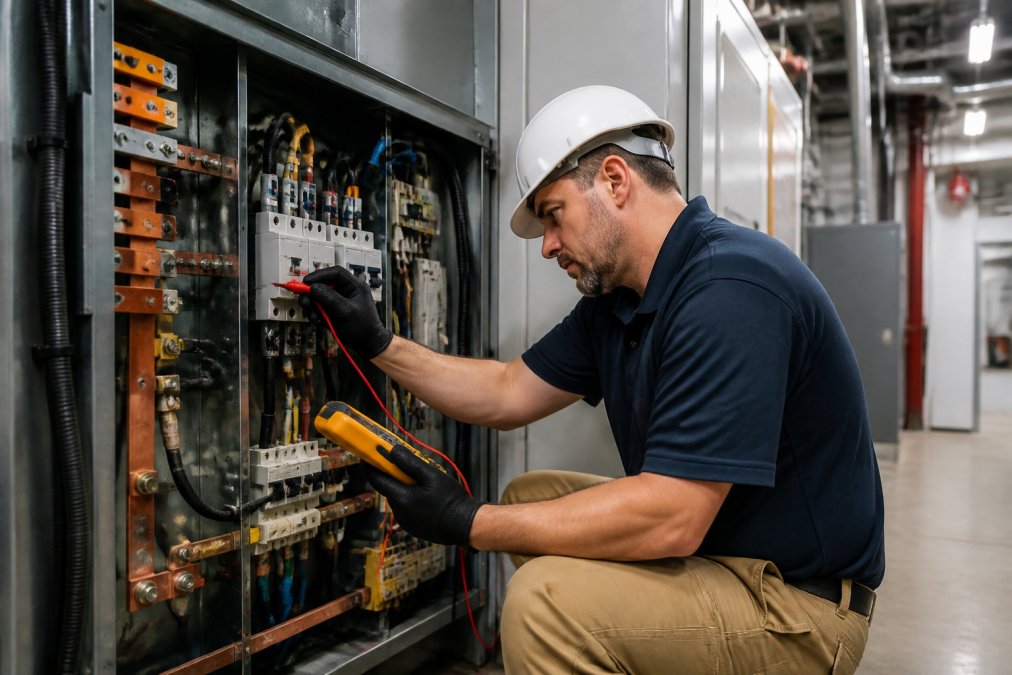
Treat the infrared scan as the anchor of the annual program: it finds loose connections and overloaded conductors that visual inspection misses and produces a dated record of active monitoring.
What the visual inspection should actually look for
A useful walk-through checklist is specific enough that two inspectors would reach the same conclusion:
- Discoloration, arcing marks, or heat damage on enclosure interiors
- Missing or broken knockout seals and open unused openings
- Corrosion or water intrusion in enclosures rated for wet or damp locations
Record each finding with location, description, severity, and a target correction date. A finding without a correction date is a note, not a corrective action.
Testing methods and pass/fail criteria
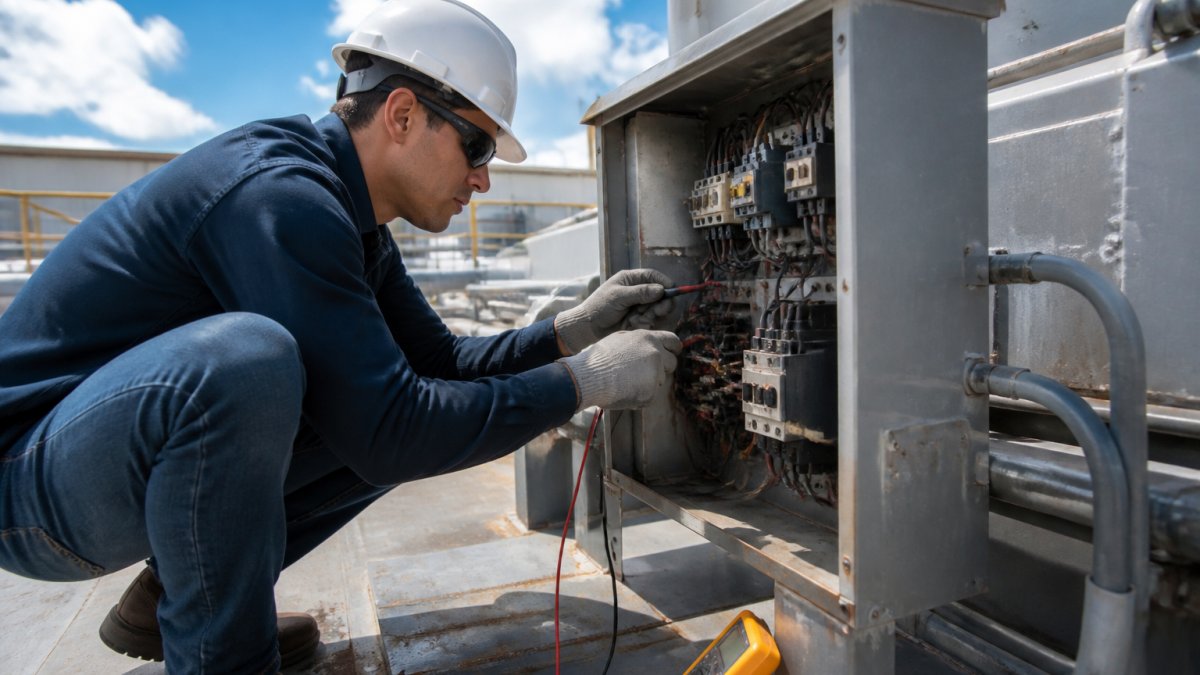
- Insulation resistance. Test at the voltage specified by the equipment manufacturer, record the value, and compare to prior readings. A downward trend across successive tests is a stronger warning than any single reading.
- Grounding continuity. Verify that equipment grounding conductors and bonding jumpers are continuous and that the electrode system is intact. Record resistance values and note any electrode that has been disturbed by excavation or construction.
- Protective device testing. Verify that circuit breakers and ground-fault devices trip within their listed tolerances. Devices that fail to trip or trip outside tolerance should be removed from service and replaced.
Corrective action and closure
Every finding should move through a defined path: identified, assigned an owner, scheduled, corrected, and verified. Verification is the step most often skipped, a re-torqued termination should be re-scanned and the result recorded, not simply marked closed. Track open findings on a single log reviewed at a regular operations meeting so deferred items do not age out.
Electrical Lockout Tagout Procedures for Safe Maintenance
Lockout/tagout (LOTO) procedures protect workers during maintenance or repair of electrical equipment by preventing accidental energization that could cause injury or death.
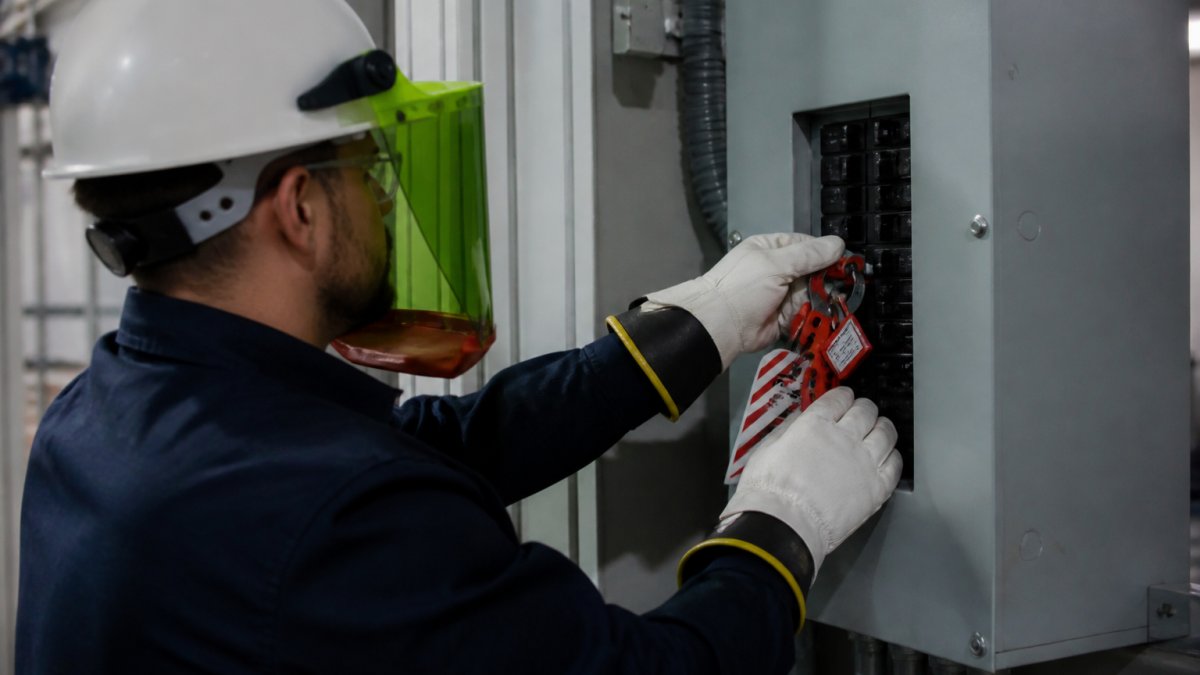
The procedure begins before any work starts.
Next, the equipment is de-energized by opening the appropriate disconnecting means.
Verification is critical.
If multiple workers are involved, each applies their own lock so no one can accidentally re-energize the system.
Obtaining Industrial Electrical Permits and Authority Review
Most industrial electrical work requires a permit and approval from the authority having jurisdiction (AHJ) before work begins, and the AHJ is rarely a single office. Knowing which agency reviews which part of your project is the difference between a smooth approval and a months-long stall.
Who has jurisdiction over what
Industrial electrical projects typically touch three separate approval tracks, and each can run on its own timeline:
- Local building and electrical permitting. City or county building departments issue electrical permits and conduct inspections. They enforce the locally adopted edition of the National Electrical Code (NEC), which is not always the newest edition published by NFPA. A jurisdiction may still be enforcing an older edition until it formally adopts the current one, so confirm the adopted edition in writing before you design to it.
- State-level plan review for certain occupancies. The state fire marshal's office reviews construction documents for specific facility types, including many healthcare, educational, and assembly occupancies, and coordinates with local fire officials. Industrial projects that include these occupancies can require a state review in addition to the local permit.
- Environmental and industrial pre-treatment permits. Facilities with process wastewater, stormwater exposure, or air emissions may need separate permits from the state environmental protection agency before electrical work supporting that process equipment can be energized.
Facility managers often secure the local permit, complete the installation, and only then discover a state fire marshal review or environmental permit was also required. Build the approval matrix at the start of the project, not after the equipment is on site.
What the plan review actually checks
Plan reviewers compare your submittal against the adopted NEC edition and local amendments. Submittals that move fastest typically include:
- Electrical single-line diagrams showing service capacity, distribution, and overcurrent protection
- Equipment schedules with voltage, amperage, interrupting rating, and short-circuit current rating
- Grounding and bonding details, including the electrode system and equipment grounding conductors
Incomplete submittals are the most common cause of review delays; a reviewer who must request a missing short-circuit current rating or equipment listing mark will return the package and the clock restarts.
The inspection sequence
Once the permit is issued, inspections generally occur in stages:
- Rough-in inspection before conductors are concealed, covering raceways, boxes, and grounding.
- Service and feeder inspection after equipment is set but before it is energized.
- Final inspection after completion, before the system is placed in service.
Some jurisdictions also require a separate inspection before energizing a service above a certain amperage. Ask the AHJ for its inspection card or sequence at permit issuance so you can schedule the trades around it.
Documentation to keep on site
Keep approved plans, the permit card, inspection sign-offs, equipment listing documentation, and any arc-flash or short-circuit study on site and current. These are the first documents requested by a workplace safety inspector or returning AHJ; a binder missing the approved revision or final sign-off is treated as an open item regardless of installation quality.
Incident Response and Corrective Action for Electrical Failures
When electrical incidents occur, equipment failures, injuries, near-misses, a structured response process protects workers, preserves evidence, and drives continuous improvement.
Immediate response prioritizes safety. If someone is injured, emergency services are called first.
The investigation documents what happened, why, and what corrective actions will prevent recurrence.
Documentation of incidents and corrective actions demonstrates your commitment to safety and provides evidence of compliance.
Industrial electrical safety compliance in Florida protects your workers and your facility's operational continuity. Our team works with your facility to conduct thorough inspections, identify hazards, and develop corrective action plans tailored to your specific equipment and operations. Get started with Costena Services industrial electrical expertise and build a safety program that protects your team and keeps your facility operating safely within code requirements.
Frequently Asked Questions
What electrical code applies to industrial facilities in Florida?
Industrial electrical systems in Florida must comply with the National Electrical Code (NEC), which is adopted through the Florida Building Code. The current NEC edition serves as the foundation for all electrical installations. Additionally, NFPA 70E covers electrical safety in the workplace, and NFPA 99 addresses healthcare facilities if applicable. The Authority Having Jurisdiction (AHJ) in your jurisdiction interprets and enforces these codes locally, so verify current requirements with your local plan review office before beginning any electrical work.
Do industrial electrical projects in Florida require permits?
Yes, most industrial electrical projects require permits in Florida. Any new electrical installation, significant modifications, or upgrades to electrical distribution systems must go through the permit process with your local authority. This includes changes to panels, circuits, equipment, and protective devices. The permit ensures code compliance and allows the AHJ to conduct inspections at critical stages. Contact your local building department or plan review office to determine specific permit requirements for your project scope.
What should an industrial electrical safety program include?
A comprehensive industrial electrical safety program must include hazard identification and risk assessment, safe work practices documentation, qualified person designation and training requirements, personal protective equipment (PPE) selection guidelines, lockout/tagout procedures, incident prevention protocols, and regular safety education for all employees. The program should address arc flash hazards, electrical shock prevention, and energized electrical work protocols. Documentation of training, inspections, and corrective actions is essential. Review your program annually and update it when equipment or processes change.
How often should industrial electrical equipment be inspected?
Regular inspections are critical to industrial electrical safety compliance. Electrical distribution systems, panels, and protective devices should be inspected at least annually, though high-use facilities may need more frequent checks. Pre-inspection assessments should occur before any maintenance work begins. After significant electrical work or upgrades, a post-installation inspection is required before equipment energizes. Document all inspection dates, findings, and corrective actions. Some equipment may require testing at specific intervals based on manufacturer recommendations or regulatory requirements.
What are the main OSHA requirements for electrical safety in industrial workplaces?
OSHA electrical safety standards require employers to identify and mitigate electrical hazards, provide arc-flash assessments, ensure qualified persons perform electrical work, mandate lockout/tagout procedures during maintenance, and require appropriate PPE selection based on hazard levels. Employers must establish safe work practices, provide employee training on electrical hazards, and maintain documentation of training and corrective actions. OSHA also requires that electrical installations meet the NEC and that equipment be properly grounded and protected by appropriate devices. Regular compliance reviews help identify gaps in your safety program.
What is the difference between a qualified person and a general employee in electrical work?
A qualified person has training and knowledge to recognize electrical hazards and understand procedures to minimize risk. They can perform electrical work, troubleshooting, and maintenance on energized equipment when necessary. General employees are not trained to work with electrical systems and must not perform electrical tasks. All industrial facilities must clearly identify qualified persons, document their training, and ensure they maintain current knowledge of NEC requirements and safe work practices. Regular safety education keeps qualified persons current on code changes and incident prevention.
What happens if an industrial electrical facility fails a compliance inspection?
Failure to comply with electrical codes during inspection results in corrective-action requirements. The AHJ or inspector will issue citations detailing specific code violations. Your facility must develop and document a corrective-action plan addressing each violation, including timelines for correction and responsible parties. Corrective actions may range from equipment repairs to procedure changes to employee retraining. Once corrections are complete, a follow-up inspection confirms compliance. Serious violations can result in work stoppages or fines, so prompt corrective action is essential to resume operations safely.