 ultimate-guide
Electrical Troubleshooting for Commercial Buildings: A Complete Guide
Table of Contents
- Common Electrical Issues in Commercial Buildings
- Common Commercial Electrical Warning Signs to Watch For
- Electrical Diagnostic Tools for Facility Managers
- Commercial Electrical Maintenance vs. Emergency Repair: When to Call
- Step-by-Step Troubleshooting Guide for Commercial Electrical Problems
- Preventative Maintenance and Regulatory Compliance
- Emergency Response Protocols and Safety Measures
- Frequently Asked Questions
Last Updated: September 27, 2026
Common Electrical Issues in Commercial Buildings
Electrical troubleshooting for commercial buildings requires a systematic approach to identifying and resolving problems before they escalate into safety hazards or costly downtime. Most facility managers encounter recurring issues that, while manageable with proper diagnosis, can become dangerous if left unaddressed. Understanding the root causes of these problems is the first step toward effective maintenance and prevention.
Overloaded Circuits and Tripping Breakers
Overloaded circuits represent one of the most common electrical issues in commercial properties. When electrical load exceeds the capacity of a circuit, the breaker trips as a protective mechanism. This isn't a failure of the breaker, it's working exactly as designed. However, repeated tripping signals an underlying problem that demands investigation.
The issue typically stems from too many high-demand devices operating simultaneously on a single circuit. In older commercial buildings, electrical infrastructure was designed for different usage patterns than exist today. Modern offices add computers, servers, HVAC systems, and charging stations that earlier wiring never anticipated. A common mistake is simply resetting the breaker repeatedly without addressing the actual overload. This approach masks the problem and increases fire risk.
The solution involves either redistributing the load across multiple circuits or upgrading the panel capacity. Before making expensive upgrades, a proper electrical audit can often reveal simple redistribution opportunities that resolve the problem immediately.
Faulty or Aging Wiring and Outdated Panels
Aging wiring is particularly problematic in commercial buildings constructed before 2000. Older installations used materials and techniques that no longer meet current electrical codes. Insulation deteriorates over decades, connections loosen, and the overall infrastructure becomes unreliable.
Outdated electrical panels compound this issue. Undersized panels cannot safely distribute modern electrical loads. When a panel lacks sufficient capacity, it creates bottlenecks that force circuits to operate near maximum capacity continuously. This constant strain accelerates degradation and increases failure risk.
Signs of problematic wiring include discoloration around outlets, a burning smell near panels, or visible damage to conduit and junction boxes. These indicators warrant immediate professional inspection. Wiring integrity directly affects both safety and operational reliability, compromised wiring can lead to equipment damage, data loss, and facility shutdowns.
Power Surges and Voltage Fluctuations
Power surges represent acute threats to electrical systems and connected equipment. External surges from utility lines, lightning, or utility switching can damage sensitive electronics instantly. Internal surges occur when large equipment cycles on or off, creating momentary voltage spikes.
Voltage fluctuations, sustained variations above or below standard 120V/208V/277V levels, damage equipment gradually. Computers, servers, and HVAC systems operate less efficiently under improper voltage, reducing lifespan and increasing failure frequency. Ground loops, where multiple paths exist for electrical current to return to ground, create voltage instability and introduce noise into sensitive systems.
Commercial buildings benefit from surge protection at multiple levels: utility-scale protection at the main panel, branch-level protection for critical circuits, and point-of-use protection for sensitive equipment.
Common Commercial Electrical Warning Signs to Watch For
Recognizing warning signs early allows facility managers to schedule maintenance before problems become emergencies. These indicators signal that electrical troubleshooting for commercial buildings should be prioritized.
Flickering or Dimming Lights
Flickering lights indicate unstable voltage supply or loose connections. The problem may originate at the utility, within the building's main service, or at individual fixtures. Dimming that occurs when large equipment operates suggests insufficient capacity to handle simultaneous loads.
Dead Outlets and Switches
Non-functional outlets and switches stem from several causes: tripped GFCI devices, failed breakers, loose connections, or burned-out switches. The first step is determining whether the problem affects one outlet, one circuit, or multiple circuits.
Electrical Diagnostic Tools for Facility Managers
Modern electrical troubleshooting for commercial buildings relies on specialized equipment that safely identifies problems without guesswork. Facility managers don't need to become electricians, but understanding available diagnostic tools helps communicate effectively with service providers.
Commercial Electrical Maintenance vs. Emergency Repair: When to Call
Distinguishing between scheduled maintenance and emergency situations determines response urgency and cost. Preventative maintenance for commercial electrical systems catches problems early, while emergency repairs address acute failures.
Step-by-Step Troubleshooting Guide for Commercial Electrical Problems
Systematic troubleshooting for electrical troubleshooting for commercial buildings follows a logical sequence that narrows possibilities and identifies problems efficiently.
Step 1: Document the Problem and Electrical Load
Begin by documenting exactly what's happening. Record when the problem occurs, which areas are affected, and what equipment was operating at the time. Note any patterns: Does it happen at specific times? During peak usage? After recent weather events?
Step 2: Inspect the Electrical Panel and Circuit Breakers
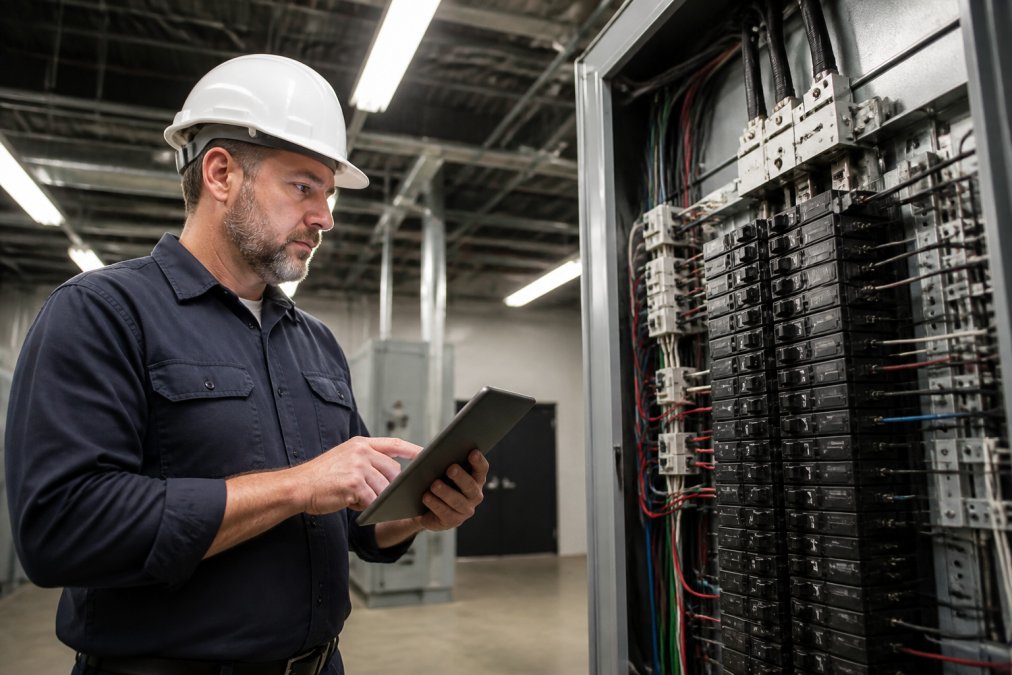
Visual inspection of the electrical panel provides immediate information. Look for signs of heat damage, discoloration, or corrosion. Check that all breakers are in the fully on or fully off position, a breaker in the middle position indicates it has tripped.
Step 3: Test for Voltage Spikes and Ground Loops
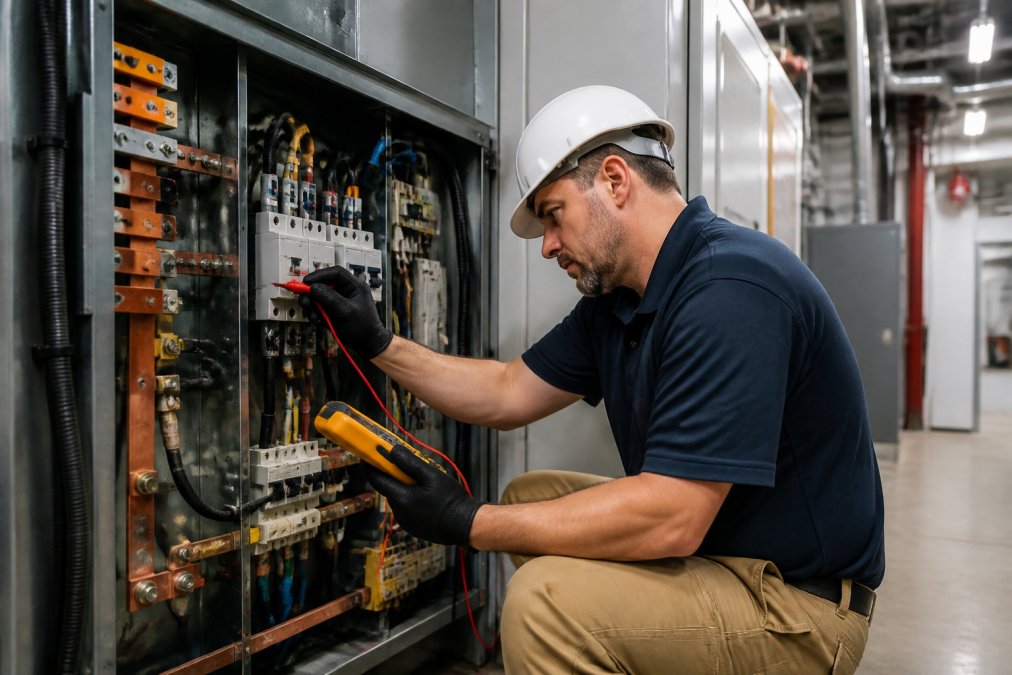
Use a multimeter to measure voltage at outlets throughout the affected area. Standard voltage should be 120V for standard outlets, 208V or 277V depending on system configuration. Readings consistently high or low indicate utility issues or internal distribution problems.
Step 4: Check Wiring Integrity and Connections
Visually inspect visible wiring for damage, discoloration, or improper routing. Look for connections that appear loose or corroded. Loose connections generate heat and create voltage drops.
Preventative Maintenance and Regulatory Compliance
Proactive maintenance prevents emergencies and ensures that electrical systems operate safely and efficiently. Compliance with applicable regulations protects both occupants and the business.
Energy Efficiency Audits and Load Balancing
Energy efficiency audits examine how electrical systems operate and identify waste. These audits reveal opportunities to reduce consumption through better load distribution, equipment upgrades, or operational changes.
NEC and OSHA Compliance for Commercial Electrical Systems
The National Electrical Code (NEC) establishes minimum standards for electrical installation and maintenance (Learn More About NFPA 70, National Electrical Code (NEC)). Compliance is not optional, it's a legal requirement that protects occupants and maintains insurance coverage. The NEC is updated every three years, so commercial facilities must stay current with applicable standards.
Emergency Response Protocols and Safety Measures
Electrical emergencies demand immediate, coordinated response to minimize injury and property damage. Every facility should have protocols in place before emergencies occur.
Frequently Asked Questions
What are the most common electrical troubleshooting problems in commercial buildings?
The most frequent issues include overloaded circuits that trip breakers, voltage fluctuations from power surges, faulty wiring in aging buildings, and undersized electrical panels that cannot handle current demand. Flickering lights, dead outlets, and ground loops also rank high. These problems often stem from outdated electrical infrastructure, inadequate load balancing, or deferred maintenance. Identifying these issues early through regular inspections and diagnostic testing prevents costly downtime and safety hazards.
How can facility managers identify electrical warning signs before a failure occurs?
Watch for common commercial electrical warning signs like intermittent flickering or dimming lights, outlets that stop working without obvious cause, breakers that trip repeatedly, burning smells near outlets or panels, and unusual humming sounds from electrical equipment. Thermal imaging can detect hot spots in wiring and connections. Regular inspections of your electrical infrastructure, combined with voltage testing and wiring integrity checks, catch problems before they escalate. Energy efficiency audits also reveal inefficiencies that signal underlying issues.
What are the standard steps in troubleshooting a commercial electrical fault?
Start by documenting the problem and measuring your facility's electrical load. Next, inspect the electrical panel and circuit breakers for signs of damage or tripping. Test for voltage spikes and ground loops using appropriate diagnostic tools. Then check wiring integrity and all connections for corrosion or looseness. Finally, verify that your electrical system complies with NEC requirements. This systematic approach isolates the root cause and prevents misdiagnosis. When in doubt, consult a licensed electrician to ensure safety and proper code compliance.
What's the difference between commercial electrical maintenance and emergency repair?
Preventative maintenance includes regular inspections, load balancing, thermal imaging, and compliance audits to catch problems early and extend equipment life. Emergency repair addresses sudden failures like complete power loss, burning smells, or safety hazards that demand immediate attention. Maintenance prevents emergencies and reduces overall costs; emergency repair is reactive and often more expensive. A solid preventative maintenance program, including annual inspections and load testing, minimizes emergency calls and protects your commercial property from unexpected downtime.
What safety protocols must be followed during commercial electrical diagnostics?
Always de-energize circuits before inspecting wiring or connections. Use proper personal protective equipment (PPE) including insulated gloves and safety glasses. Follow OSHA guidelines for working with electrical systems. Never work on live circuits unless absolutely necessary and only with proper training. Use calibrated diagnostic tools and test equipment according to manufacturer specifications. Ensure your facility manager or maintenance team receives training on electrical hazards. When complexity or risk is high, engage a licensed electrician to perform diagnostics safely and maintain NEC compliance.
How do energy efficiency audits help with electrical troubleshooting?
Energy efficiency audits reveal inefficiencies and imbalances in your electrical load distribution. They identify circuits operating above safe capacity, equipment consuming excess power, and areas where voltage fluctuations occur. These findings point to underlying problems, undersized panels, faulty wiring, or load imbalance, that cause flickering lights, tripping breakers, and power surges. By addressing these issues, you improve system reliability, reduce energy costs, and prevent electrical hazards. Audits also ensure your commercial electrical infrastructure meets current code requirements and operates safely.
What electrical diagnostic tools should facility managers have on hand?
Essential electrical diagnostic tools for facility managers include a multimeter for voltage and continuity testing, a clamp meter for measuring electrical load, thermal imaging equipment for detecting hot spots in wiring, and a power quality analyzer for identifying voltage spikes and ground loops. A flashlight, insulated screwdrivers, and wire strippers are basics. For advanced diagnostics, ground resistance testers and insulation resistance meters help assess wiring integrity. Many facility managers partner with licensed electricians who bring specialized equipment. Proper training ensures safe, accurate use of all diagnostic tools.