 blog
blog
Emergency Electrician Services Tampa Bay: What to Know
Table of Contents
- What Counts as an Electrical Emergency in Tampa Bay
- Signs of an Electrical Emergency You Should Never Ignore
- What the Cost of an Emergency Electrician Actually Covers
- Step-by-Step Safety Protocols While You Wait for Help
- Electrical Safety Tips for Homeowners to Prevent the Next Call
- Licensed Electricians, Code Compliance, and Insurance Claims
- Why Costena Services Handles Emergency Calls Differently
- Frequently Asked Questions
Last Updated: September 23, 2026
What Counts as an Electrical Emergency in Tampa Bay
An electrical emergency is any fault in your home's wiring, panel, or outlets that poses an immediate risk of fire, shock, or electrocution. When you search for emergency electrician services Tampa Bay homeowners can count on, the question is simpler: does this threaten life or property right now?
Situations That Cannot Wait Until Morning
- Sparking outlets or switches that arc when you plug something in
- A burning smell near an outlet, panel, or appliance, which often points to overheating wires
- A tripped breaker that will not reset or keeps tripping immediately
- Buzzing or humming from the electrical panel, a sign of loose connections
- Downed or exposed wiring after a storm
- Water contact with any electrical fixture or outlet
The U.S. Fire Administration electrical fire safety guidance notes that electrical failures and malfunctions play a role in a large share of home fires each year. That is why heat and smoke signals deserve a same-day response, not a "next week" appointment.
Signs of an Electrical Emergency You Should Never Ignore
The clearest sign of an electrical emergency is any combination of heat, smoke, sparking, or burning odor. One symptom can be a warning; two or more usually mean the fault is active.
Warning Signs Inside Your Home
- Lights that flicker or dim when appliances cycle on
- Outlets or switch plates that feel warm to the touch
- A faint burning smell with no visible source
- Scorch marks or discoloration around an outlet
- Frequent breaker trips in the same area of the house
- A ground fault circuit interrupter (GFCI) that will not stay reset
- Buzzing sounds from the electrical panel
Voltage fluctuations across the whole house often point to a failing main panel or loose service connection, a job for a licensed electrician. Treat any affected circuit as live and stop using it.
What the Cost of an Emergency Electrician Actually Covers
Here is what drives the bill for emergency electrical work.
Typical Cost Ranges for Common Emergency Calls
| Emergency Type | Typical Range | What Drives the Number |
|---|---|---|
| Dead outlet or switch replacement | $150 - $350 | Whether the fault is at the device or upstream in the circuit |
| Tripping breaker diagnosis and reset | $200 - $450 | Isolating the circuit; replacing the breaker if it has failed |
| GFCI outlet replacement | $175 - $400 | Matching the existing amperage and wiring configuration |
| Ceiling fan or light fixture fault | $200 - $500 | Access height, fixture weight, and whether a new box is needed |
| Partial power loss (one room or circuit) | $250 - $600 | Tracing the open neutral or loose connection behind finished walls |
| Full panel replacement | $1,800 - $4,500 | Panel amperage, permit fees, and utility disconnect coordination |
| Storm damage or downed service line | $500 - $3,000+ | Whether the mast, meter base, or service entrance needs rebuilding |
What Triggers After-Hours Pricing
Emergency rates may apply outside standard business hours, on weekends, and on holidays. Costena Services offers flexible scheduling to accommodate busy lifestyles without a separate after-hours penalty structure.
- Is there a separate after-hours dispatch fee, and how much is it?
- Is the quoted price for the job, or is it an hourly rate that keeps running?
Why Job-Based Pricing Changes the Math
Costena Services prices by the job, not the hour. You get a clear number before work begins, so a diagnosis that uncovers a bigger problem does not become a surprise invoice, the difference between a known cost and an open-ended one.
What Is Not Included in a Typical Quote
Costena Services provides upfront pricing by the job. This typically covers labor and standard parts, but usually not:
- Permit fees, which vary by jurisdiction and are required for panel replacements and new circuits
- Drywall or finish repair after the electrician opens a wall to reach a fault
- Utility coordination, if the service line or meter base needs to be disconnected and reconnected
- Specialty or obsolete parts, such as discontinued breaker models for older panels
Step-by-Step Safety Protocols While You Wait for Help
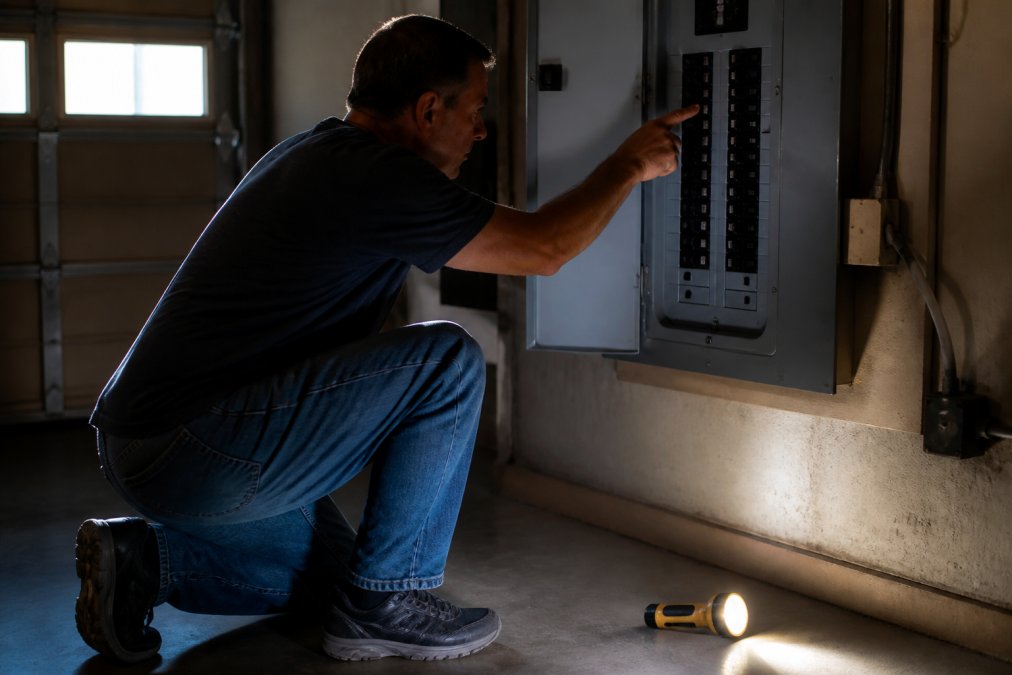
Your first move in an electrical emergency is to cut power at the source if safe, then move people away from the affected area. Everything else can wait for the electrician.
Follow these steps in order:
- Do not touch the affected outlet, switch, or appliance. Treat it as live.
- Shut off the breaker for that circuit at the panel, using one hand and standing on a dry surface.
- If you see smoke or flames, leave the building and call 911 from outside.
- Keep children and pets away from the area until help arrives.
- Do not pour water on anything electrical, ever.
- Clear a path to the panel so the technician can work fast when they arrive.
Electrical Safety Tips for Homeowners to Prevent the Next Call
Most electrical emergencies start as small, ignored problems. Prevention is about catching faults early.
- Replace outlets that feel warm or look discolored. Heat means resistance, and resistance means risk.
- Test your GFCIs monthly using the test button on the outlet itself.
- Avoid daisy-chaining power strips. One strip per outlet, and never strip into strip.
- Match bulb wattage to the fixture rating. Higher-wattage bulbs overheat the socket.
- Keep the panel area clear and check for rust or moisture.
- Schedule an electrical inspection if your home is older or you have never had one.
Licensed Electricians, Code Compliance, and Insurance Claims
Hiring a licensed electrician is not just a quality issue. It affects whether your insurance claim is paid, whether your home passes a future inspection, and whether you carry liability if a repair later causes a fire.
What Licensing Actually Requires
A licensed electrical contractor in this state must pass a competency exam, carry liability and workers' compensation insurance, and pull permits for their work. The license number is public record and verifiable through the state licensing database before anyone touches your panel.
When a Permit Is Required
Not every repair needs a permit, but the ones that do are the ones that matter most for insurance and resale:
- Panel replacement or upgrade, always permitted
- New circuit installation, always permitted
- Service entrance or meter base work, always permitted
- Replacing an existing outlet, switch, or fixture in the same location, typically not permitted
- Troubleshooting and repairing an existing circuit, typically not permitted unless new wiring is run
How Code Compliance Connects to Your Insurance Claim
Most homeowner policies require electrical work to meet the code in effect at installation. If a fire or damage claim traces back to unpermitted or non-compliant work, the insurer can deny or reduce the payout, one of the most common reasons electrical claims get contested.
Documenting Damage for an Insurance Claim
If a covered event, lightning strike, surge, fire, causes the damage, the documentation you collect in the first 24 hours is what the adjuster works from. Gather and keep:
- Photos of the damage before any repair begins, including the panel, the affected outlets, and any scorch marks or melted insulation
- The electrician's license number and invoice, showing the diagnosis and the repair performed
- Permit numbers and inspection sign-offs, if a permit was required
- A written description of the cause, in the electrician's words, not yours
- Receipts for any temporary measures, such as a hotel stay if the home was unsafe to occupy
What to Do If Your Claim Is Denied
- The damage was caused by deferred maintenance, not a covered event, this is why a documented maintenance history matters
- The work was unpermitted, so the insurer cannot verify code compliance
- The cause is unclear, and the insurer cannot tie the damage to a covered peril
Costena Services works with residential, commercial, and industrial clients across the area, and the same documentation standards apply whether the job is a single outlet or a multi-building property.
Why Costena Services Handles Emergency Calls Differently
Costena Services prices by the job, not the hour.
That difference changes the whole experience: you know the cost before work starts, so there is no clock pressure and no surprise invoice. The team brings more than 20 years of electrical expertise and over 35 years in residential, commercial, industrial, and military construction, so complex or older systems are routine work rather than a referral.
Frequently Asked Questions
What qualifies as an electrical emergency?
An electrical emergency is any situation with an immediate risk of fire, shock, or injury. That includes sparking outlets, a burning smell near switches or panels, smoke from wiring, buzzing sounds from an electrical panel, or exposed live wires. Flickering lights alone usually are not an emergency, but flickering combined with heat or a burning odor is. When in doubt, shut off power at the breaker and call a licensed electrician.
How much do electricians charge per hour in Florida?
Costena Services uses upfront pricing by the job, so you see the full cost before any work begins. Visit the Costena Services pricing page for current rates.
What should I do immediately if I smell burning from an outlet?
Cut power to that circuit at the breaker panel if you can reach it safely, then unplug anything connected to the outlet. Do not use the outlet again until a licensed electrician inspects it. A burning smell often points to overheating wiring, a loose connection, or a failing outlet, all of which are fire risks. Leave the area if you see smoke or flames and call 911 first.
How does upfront, job-based pricing work for electrical repairs?
With job-based pricing, you get a fixed cost for the entire repair before work starts, rather than an hourly rate that grows with time on site. Costena Services quotes the job upfront, so the price you approve is the price you pay. That approach removes the surprise of a higher bill when a repair takes longer than expected. Request a quote through the Costena Services website to see pricing for your specific issue.
Electrical emergencies rarely announce themselves politely. They show up as a burning smell at midnight, a breaker that will not stay on, or an outlet that sparks when you plug in a lamp. Costena Services handles those calls with upfront pricing by the job, more than 35 years of construction experience, and scheduling that works around your day. Get started with Costena Services and know your cost before the work begins.